Updated on: February 5, 2026
Reading Time: 16 minutes
Post Views: 2,302
Your website is a crucial component in attracting more travelers to your tourist destination. When people research potential travel spots, they check out websites to determine if a place fits their needs. Investing in travel web design is essential to deliver the best experience for your audience.
If you’re unsure where to start with travel website design, you’ve come to the right place! We’ve created this list of 14 travel website design examples to inspire you to spruce up your website.
Types of Travel Websites
Before we dive into the examples, it’s important to understand that not all travel websites are built the same. Depending on the business model and user goals, travel websites fall into different categories. Here’s a quick overview of the most common types:
1. Travel Agency Websites
These focus on booking services for flights, hotels, tours, or vacation packages. They often include booking engines, itinerary planners, and contact forms.
2. Tour Operator Websites
Designed to showcase specific tours or experiences (like safaris or city tours), these websites focus heavily on visuals, detailed itineraries, and calls-to-action for bookings.
3. Travel Blog or Influencer Websites
Focused on storytelling, tips, guides, and personal travel experiences. These typically have a strong blog layout, social media integration, and email newsletter signup.
4. Hotel & Resort Websites
These showcase accommodation options with high-quality images, room descriptions, rates, and a direct booking system.
5. Travel Marketplace Websites
Platforms where users can compare and book from multiple providers (e.g., Expedia, Booking.com). These are content-heavy and rely on filters, search functions, and integrations.
6. Destination Promotion Websites
Often created by tourism boards, these highlight attractions, cultural information, events, and reasons to visit a location. They’re content-rich and built for inspiration and planning.
7. Travel Gear or Accessory Shops
E-commerce-style travel sites selling luggage, gear, or digital travel guides. Clean product layouts and a seamless checkout process are key.
Each type of travel website has its own unique goals and design priorities. Keeping these in mind will help you better understand why certain elements are used in the examples below.
Best 25 Travel Website Designs for Inspiration
Looking for inspiration from the best travel website design practices? Here are 21 real-world travel websites — from tour providers to travel blogs — that combine form and function beautifully.
- Airbnb
- Travelocity
- Expedia
- Gocollete
- Agoda
- Thrillophilia
- Costco Travel
- Kayak
- Goway
- JetBlue
- TripAdvisor
- Booking.com
- AAA Travel
- Google Travel
- Salt in Our Hair
- Viator
- Rome2Rio
- Cubania Travel
- Mr & Mrs Smith
- Much Better Adventures
- Four Seasons
- Visit Oregon
- Black Tomato
- Responsible Travel
- The Blonde Abroad
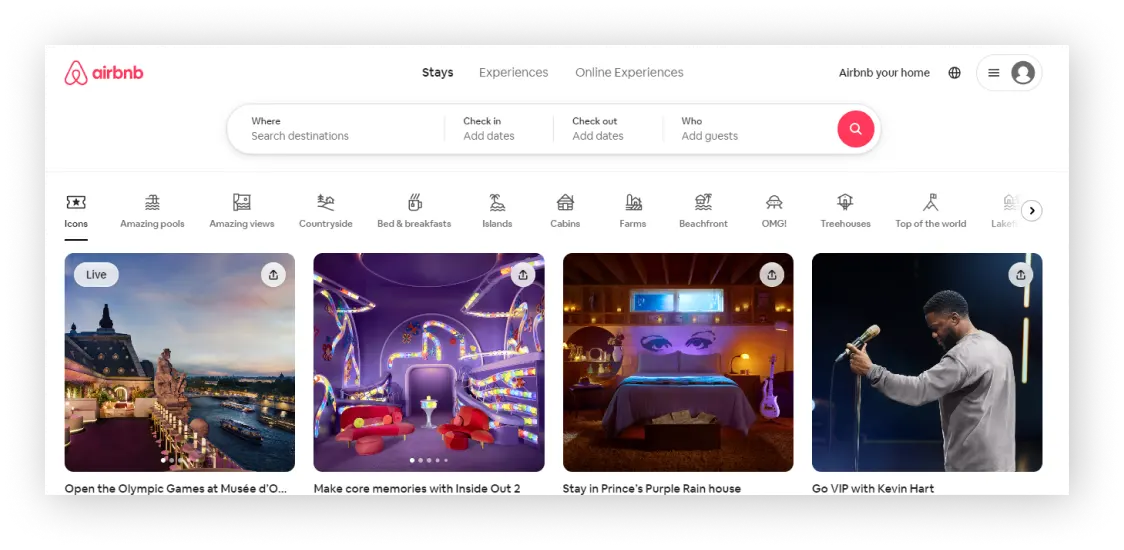
Airbnb’s website effortlessly guides users from dream to booking. The homepage is clean, elegant, and vibrant, with a prominent search box front and center.
Listings and navigation are easy to find, social media links are included, and the footer contains relevant site information. The accessibility page features engaging visuals, a strong call to action, and ample white space for readability.
Special Features:
- Search options for stays and activity planning
- Different property types available
- Language preferences
- Accommodation Options
- Visible CTA
- Detailed booking info
- Compelling social proof
- Visually appealing images
- Informative price chart
Best For: Businesses building a modern booking marketplace with high-impact visuals and strong UX flow.
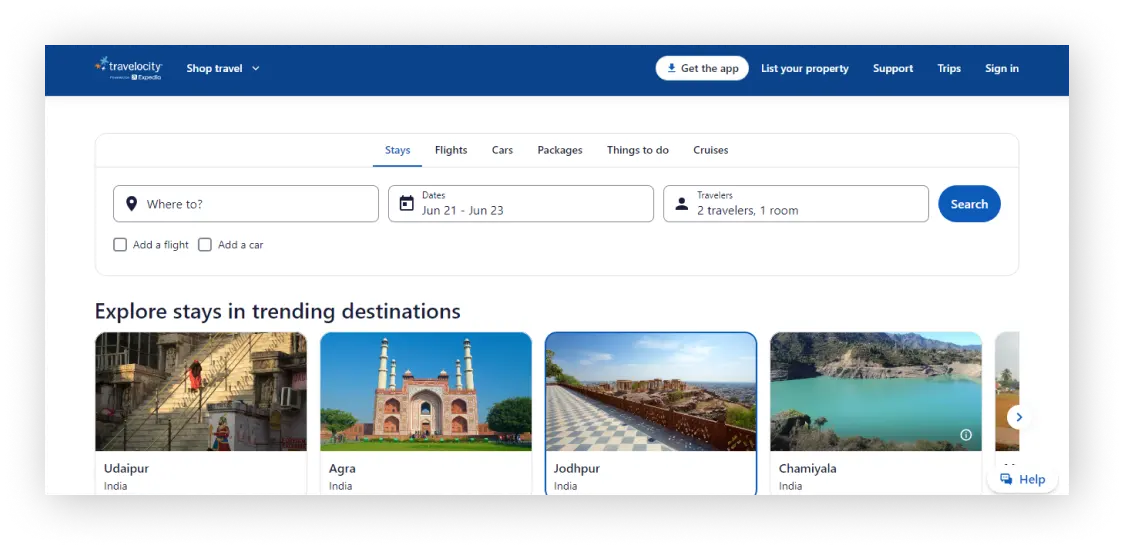
Travelocity’s website provides a user-friendly experience for travelers looking to book flights, hotels, and vacation packages. The homepage features a streamlined design with a prominent search bar, making it easy to find and compare options.
Users can access various travel deals, read customer reviews, and utilize trip planning tools. The site also offers comprehensive customer support and flexible booking options to enhance the overall travel planning process.
Special Features:
- App download option is also available.
- Comprehensive customer support
- Easy account creation
Best For: Travel companies needing a comparison-first design with clear filters and easy price navigation.
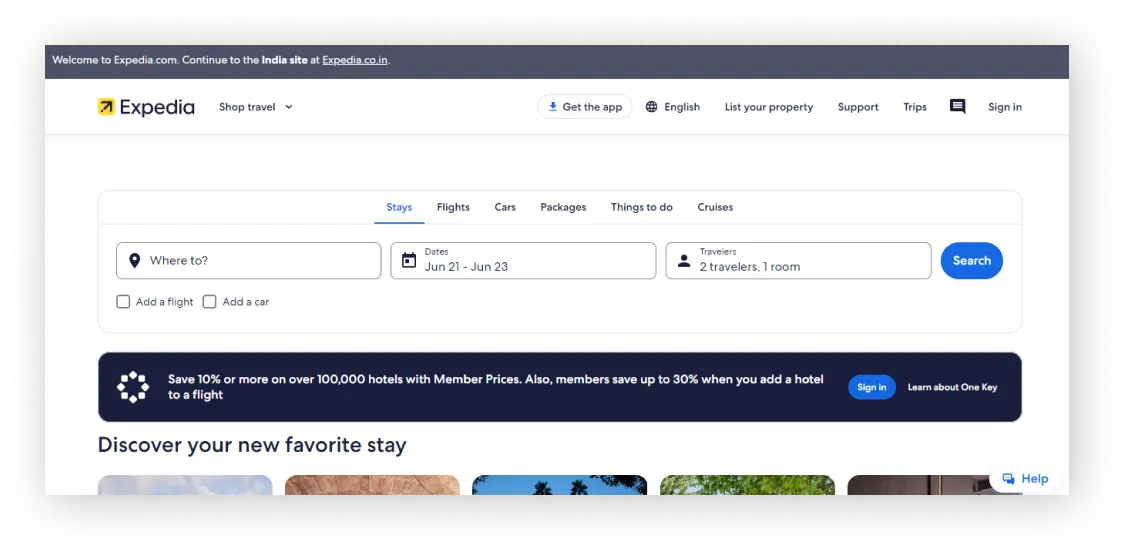
Expedia is a user-friendly travel website where you can easily navigate between stays, flights, cars, and more. It remembers your searches and auto-populates them for quick access. Additionally, it highlights last-minute weekend deals as you scroll down.
This website is similar to Travelocity in its user-friendly approach to travel planning and comprehensive booking options.
Special Features:
- Offering stay options with authentic photos.
- Featuring trending destinations
- Flexible booking option is also available
Best For: Enterprises offering multiple travel services and requiring a scalable, all-in-one booking interface.
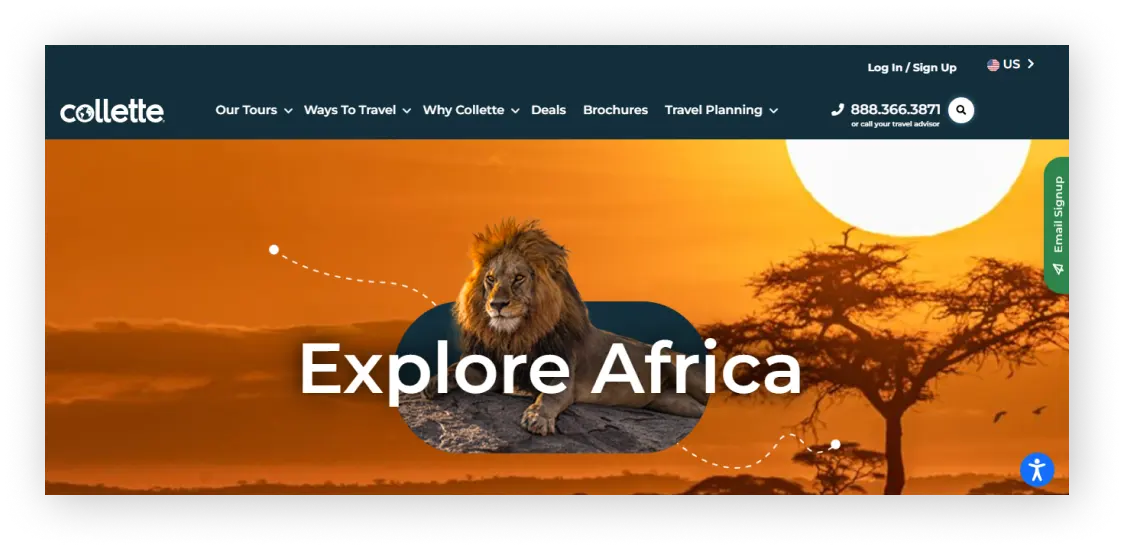
Gocollete’s web design stands out with a sleek and modern interface aimed at elevating user experience. The homepage features an eye-catching lion image that captures attention. It provides easy ways to choose a location, date range, and travel style, making booking simpler.
Special Features:
- Integrated Instagram feeds provide vibrant travel inspiration directly on the site.
- Users who need help can easily reach out to a contact number provided on the navigation
- Clear call to action
Best For: Tour providers looking for an itinerary-driven layout with organized package categorization.
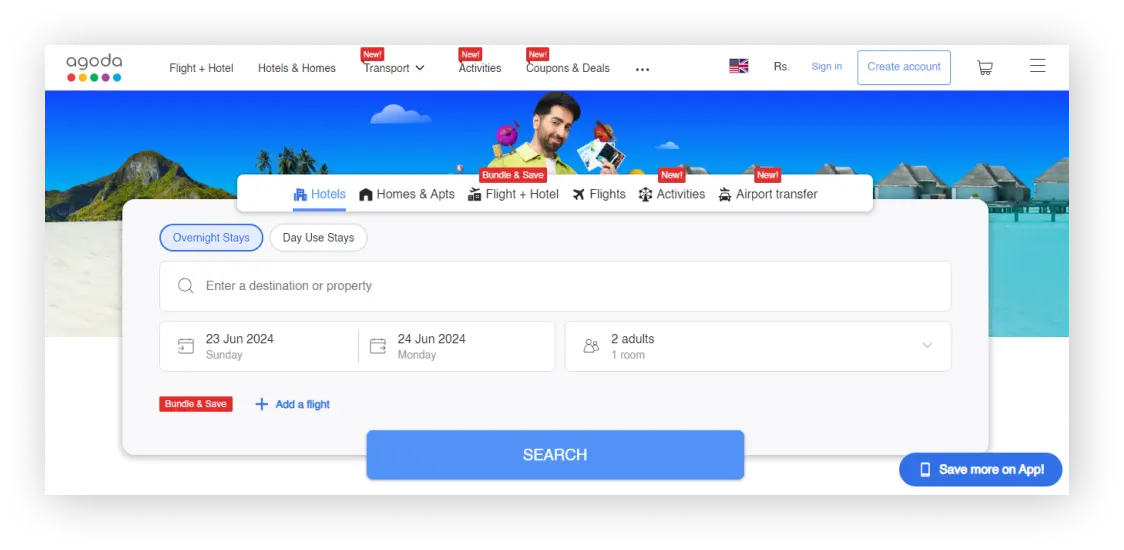
Agoda is an award-winning travel booking website known for its global accommodation options. With easy navigation and detailed search filters, customers can quickly book their preferred stays.
Customer reviews offer helpful insights for future travelers, making Agoda a prime example of a user-friendly design that enhances the booking experience.
It’s one of the best travel site design options for hotels.
Special Features:
- Agoda features Ayushmann Khurrana (Indian Actor and Singer) as their brand ambassador, leveraging his versatile persona to connect with a diverse audience.
- The website provides a clear option to download the app, giving a 10% discount for bookings made using the app
- Coupons and offers page also available
Best For: Hospitality platforms focused on mobile-first design and dynamic, deal-driven pricing.
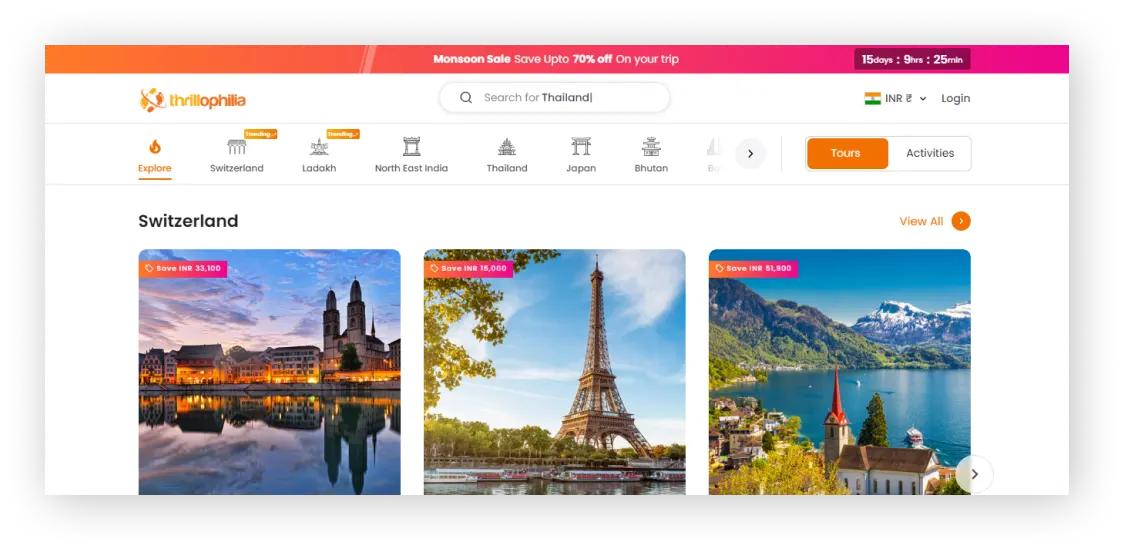
Thrillophilia is an adventure travel platform that showcases thrilling experiences worldwide. Its website design reflects this adventurous spirit with vibrant colors, playful animations, and captivating graphics, creating an exciting user experience.
Thrillophilia serves as a fantastic source of design inspiration for travel websites looking to appeal to adrenaline-seekers!
Special Features:
- They offer many travel packages for different countries. These include Switzerland, Thailand, Japan, and other. They ensure visitors can easily find and book their ideal trips.
- Option to view prices in different currencies, catering to international travelers’ preferences
Programming Languages Used: Node.js
Best For: Adventure and experience brands needing an activity-focused layout with strong visuals.
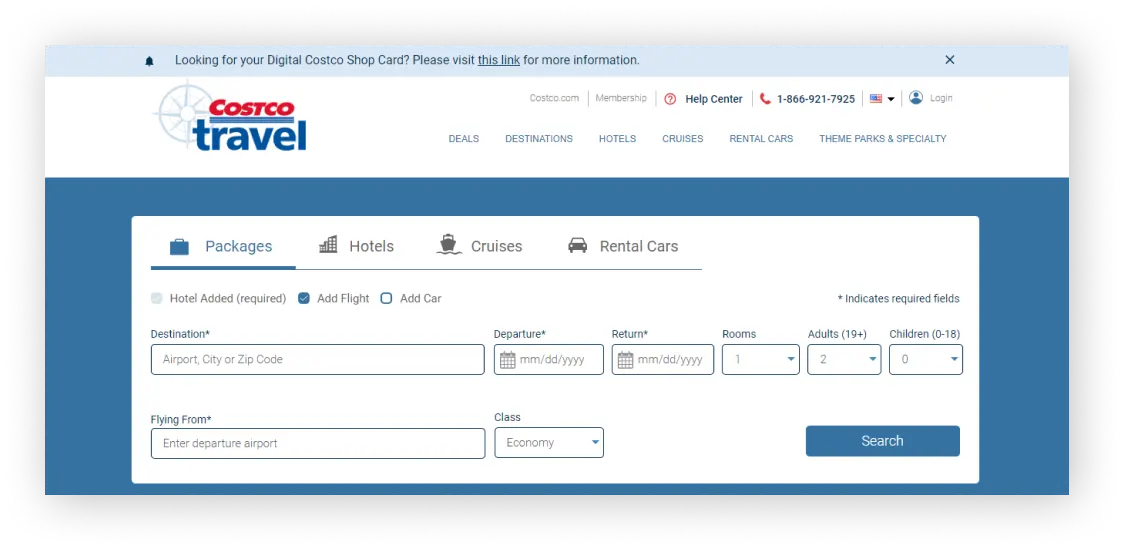
Costco Travel proves that effective travel website design doesn’t always require flashy visuals. Despite its simple appearance, it offers a seamless user experience with detailed options for trip planning.
Special Features:
- Have separate section for Travel Items
- Rewards section given on travel booking
Best For: Membership-based businesses offering bundled packages and exclusive travel deals.
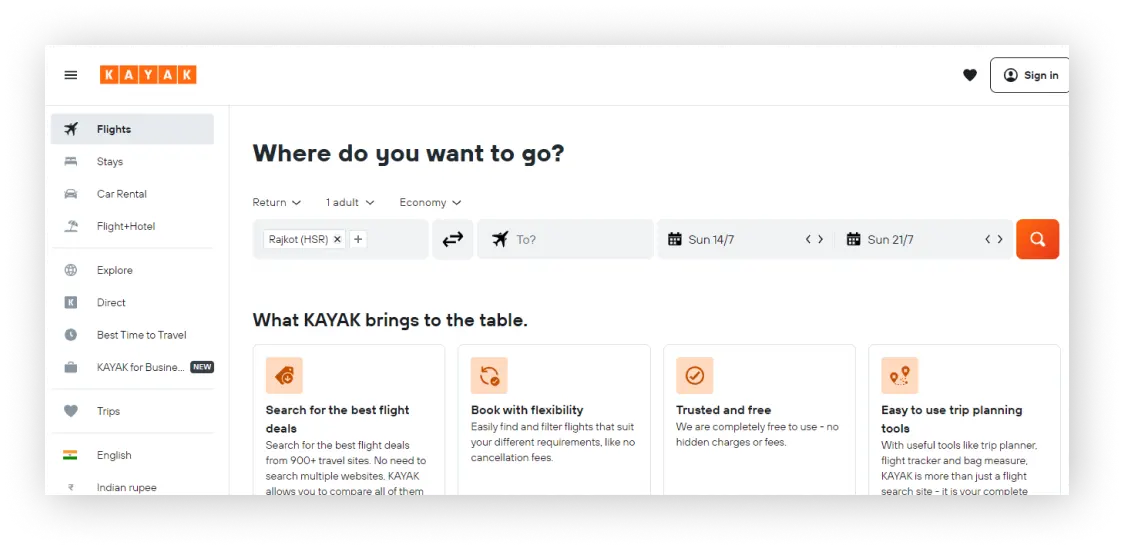
When you visit Kayak’s website, the vertical menu catches your eye right away. It sets Kayak apart from travel sites that use horizontal navigation. This feature makes it easy to navigate to any page you need, and it stays accessible as you scroll through the site.
Special Features:
- Utilizing a travel planning tool powered by ChatGPT.
- A separate page is provided for business travelers who frequently take trips for work purposes.
Best For: Metasearch platforms requiring robust search features and advanced comparison functionality.
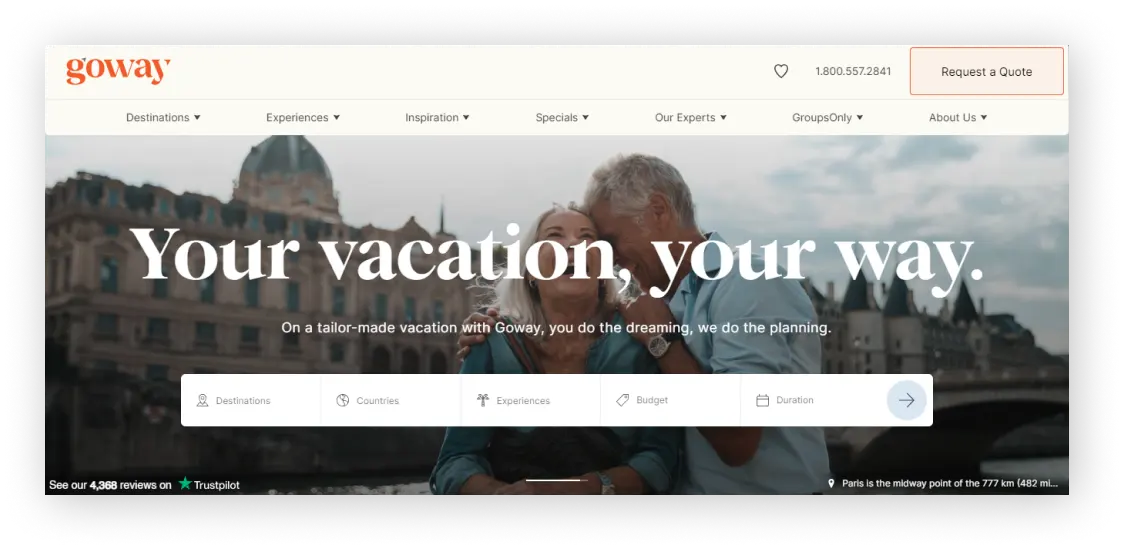
Goway’s latest website showcases a cutting-edge layout that revolutionizes personalized travel.
Special Features:
- The website’s design features a variety of trip styles tailored to match individual tastes and hobbies
- The website features reviews from travel experts in a visually appealing card format with vector graphics
- Placed trending travel blogs to inspire your next journey
- The web design includes a live chat feature for instant support
Best For: Niche travel companies offering tailor-made luxury or long-haul travel planning.
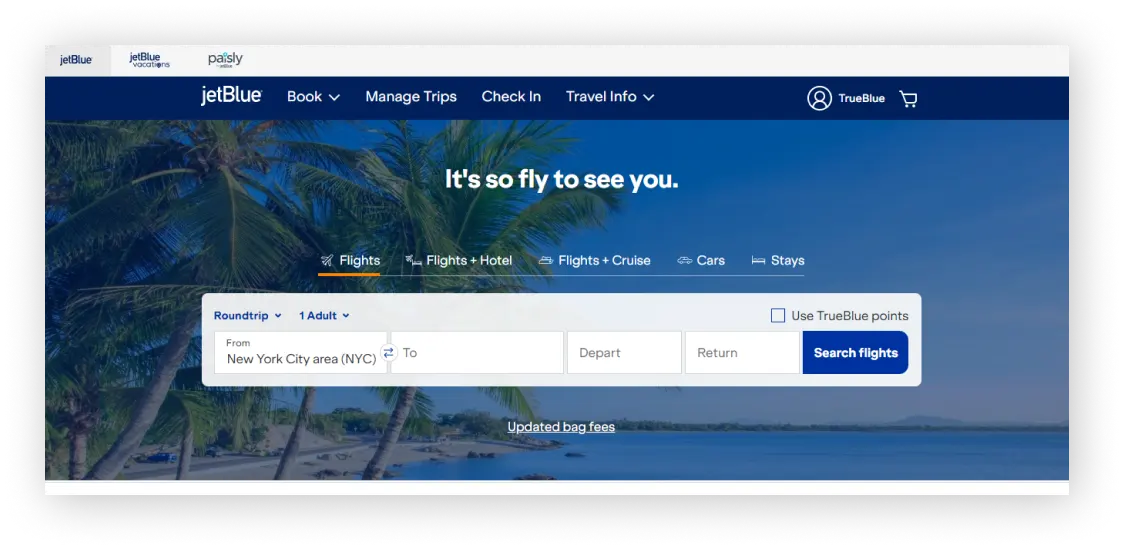
JetBlue’s website is easy to use and nice to look at. It also shows the airline’s commitment to innovation and customer-focused service. The vibrant design and intuitive interface reinforce JetBlue’s modern and creative brand identity.
The website prioritizes simplicity and practicality. It ensures a seamless experience for users at every stage of their journey. This focus aligns perfectly with JetBlue’s reputation for providing exceptional travel experiences. High-quality images and a clear layout show the airline’s dedication. They deliver information efficiently and boost passenger satisfaction.
Special Features:
- Route map
- Vacation finder
- Flight tracker
- Travel alerts
Best For: Airlines or transport companies wanting a fast, branded booking interface.
Tell Us About Your Travel Website Needs
Select your goals, describe your challenge, and we’ll take care of the rest.
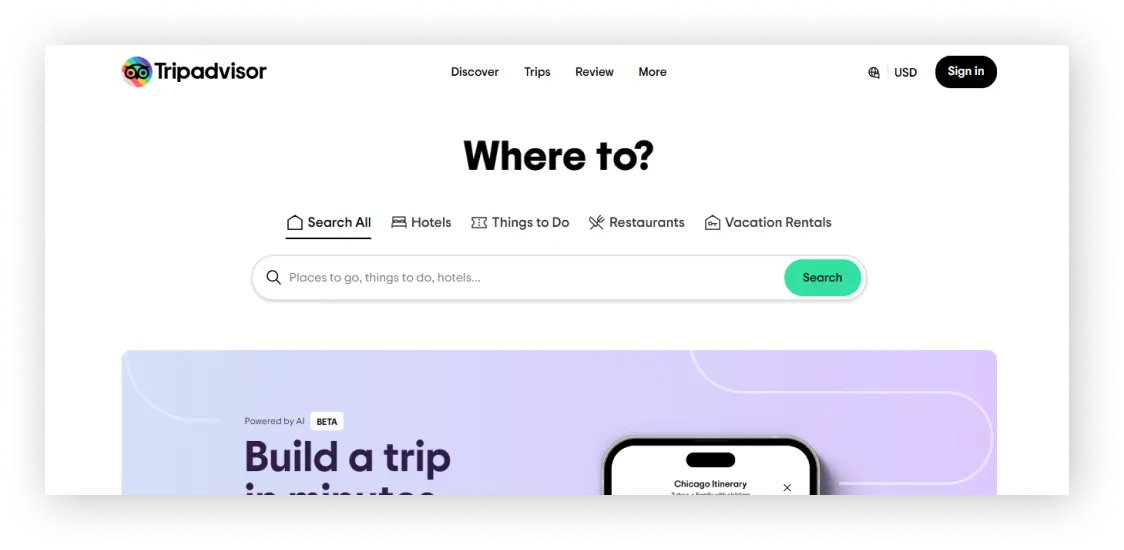
TripAdvisor is a unique travel website that offers a special feature: it uses artificial intelligence (AI) to make personalized travel plans. When you go to the site, you’ll find a helpful tool to help you plan your dream vacation. The top of the page has a simple menu that makes it easy to explore different parts of the website that you might miss otherwise.
One of the top travel website examples for user-generated content.
Special Features:
- Users can upload photos, include new places, and share their reviews
- You can Hire a Trip Designer
Best For: Platforms built around reviews, community ratings, and content-rich destination pages.
12. Booking
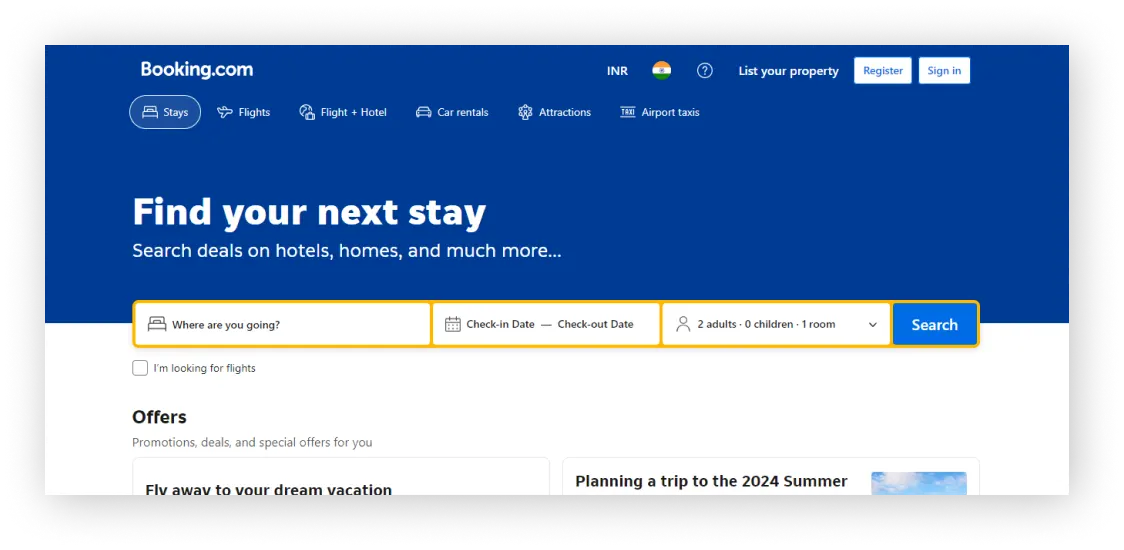
Booking.com’s website stays true to its brand identity with easy navigation and a cohesive font that complements its overall design. The layout is well-organized, making it user-friendly, and allows visitors to effortlessly scroll through trendy destinations.
Special Features:
- Frequently Asked Questions (FAQs) about airport taxi services
- Option to list your property
Best For: High-volume accommodation websites focused on conversion-optimized booking flows.
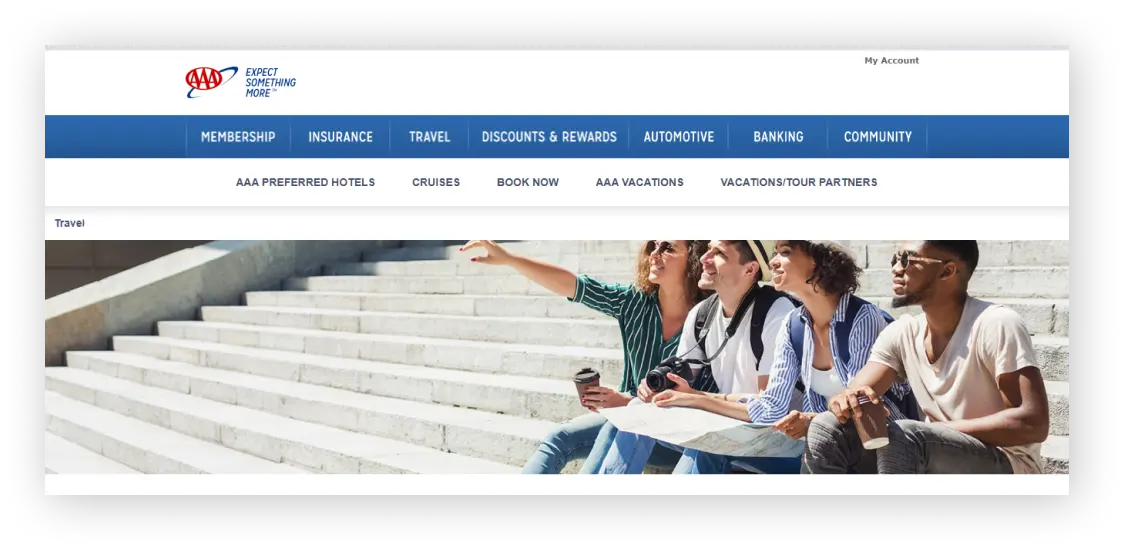
The design allows you to select hotels, flights, cars, and cruises using different filters. It also showcases vacation partners, hotel partners, and cruise partners to build trust in their services.
Special Features:
- There is a dedicated page for booking rental cars, which comes with many advantages.
- It provides access to a wealth of travel information
- The platform features three distinct websites for various travel booking needs: “Trip Canvas,” “TourBookers to navigate. The use of icons helps visitors move around the menu effortlessly. The men,” and “TripTik.”
Best For: Multi-service travel agencies needing a clean, trust-oriented layout.
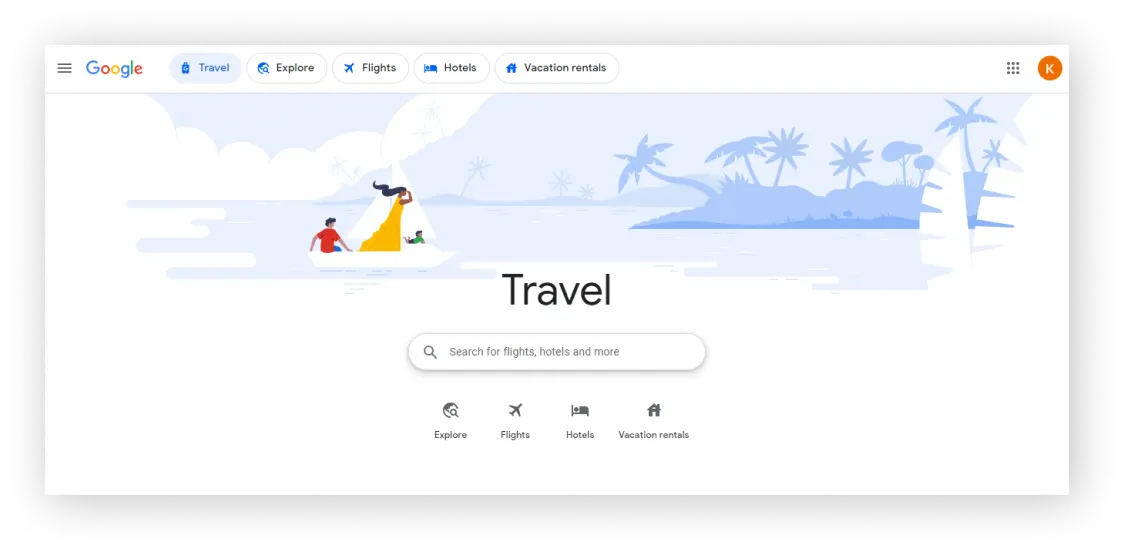
Google Travel is an example of exemplary travel website design. It features plenty of white space, making it easy for user engagement. Menu placement is also unique, making it stand out.
Special Features:
- Minimalist design
- A smooth and efficient user experience
- Gives flight alerts when prices drop
Best For: Platforms wanting a data-driven interface with smart price tracking and destination insights.
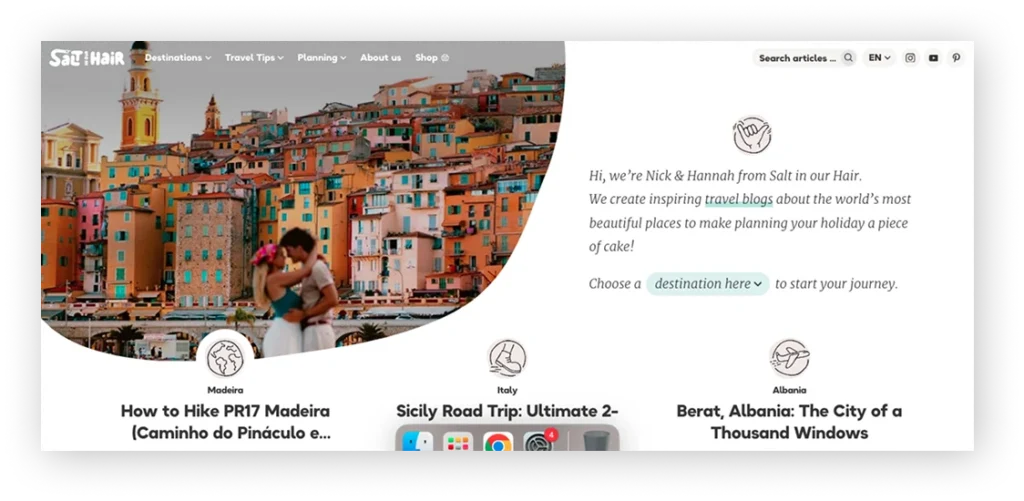
Salt in Our Hair stands out as one of those travel blogs you can scroll through for hours. Its soft pastel tones, minimalist layout, and easy navigation make it feel calm and inspiring. Whether you’re searching for destination guides, travel tips, or dreamy photo stories, this site delivers it all in a way that feels welcoming—especially on mobile.
Special Features:
Eye-catching grid-based layout for blog posts
Built-in affiliate tools and booking links
SEO-optimized travel guides
Mobile-friendly navigation
Best For: Travel blogs and content creators requiring visually rich storytelling and SEO-friendly layouts.
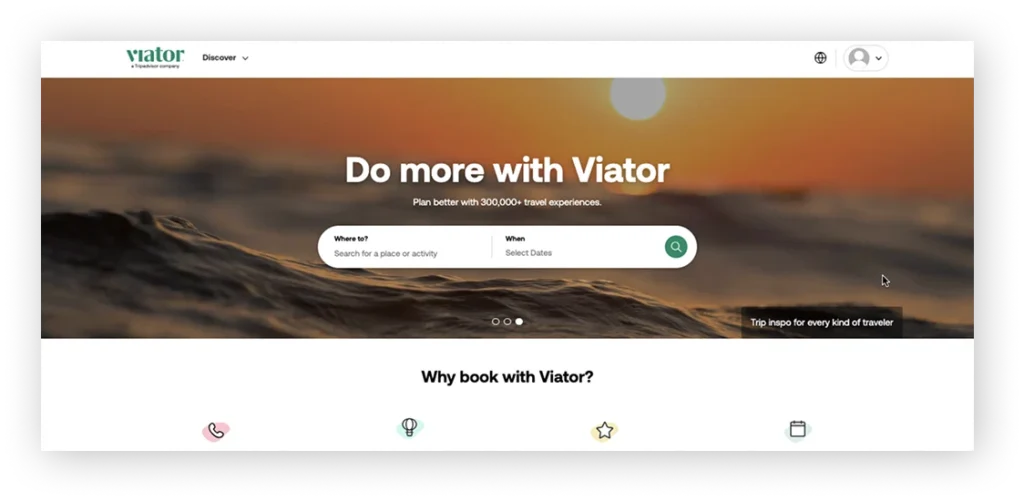
Viator offers a sleek and efficient travel experience, helping users discover and book tours and activities across the globe. The design is user-friendly, with intuitive filters and vibrant visuals that make exploring local experiences feel effortless. From last-minute adventures to curated tours, the platform makes planning smoother.
Special Features:
Smart search filters by destination, category, and rating
Rich visuals and user reviews for each experience
Mobile-first booking interface
“Reserve Now & Pay Later” option
Best For: Tour and activity platforms needing a simple list-based structure with strong CTAs.
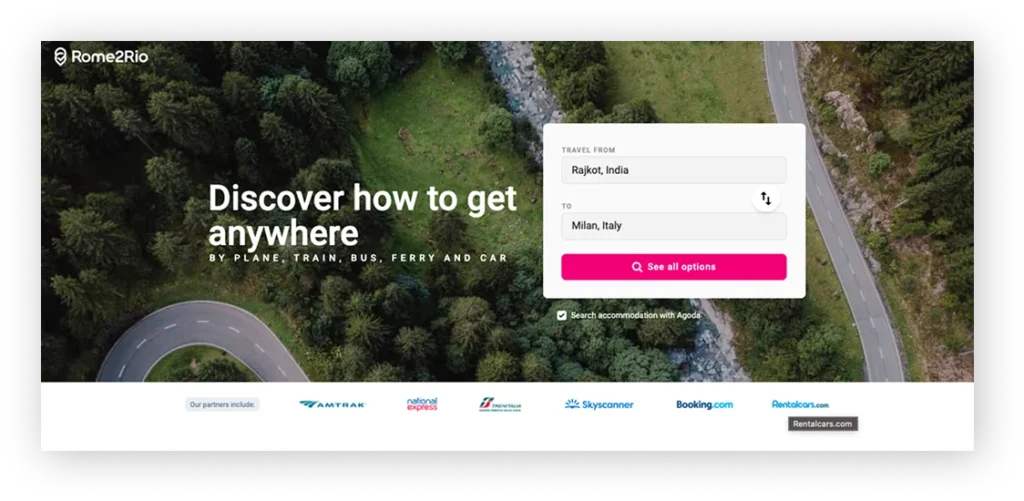
Rome2Rio takes a practical approach to travel planning, helping users figure out how to get from point A to B anywhere in the world. The clean layout and map-driven design make it easy to compare flights, buses, trains, and driving routes — all on one page.
Special Features:
Multi-modal transport comparison (air, rail, road, ferry)
Interactive maps and estimated travel time
Booking links integrated with route results
Simple, fast-loading interface for on-the-go use
Best For: Transport aggregators offering multi-mode route comparisons with maps and clear connections.
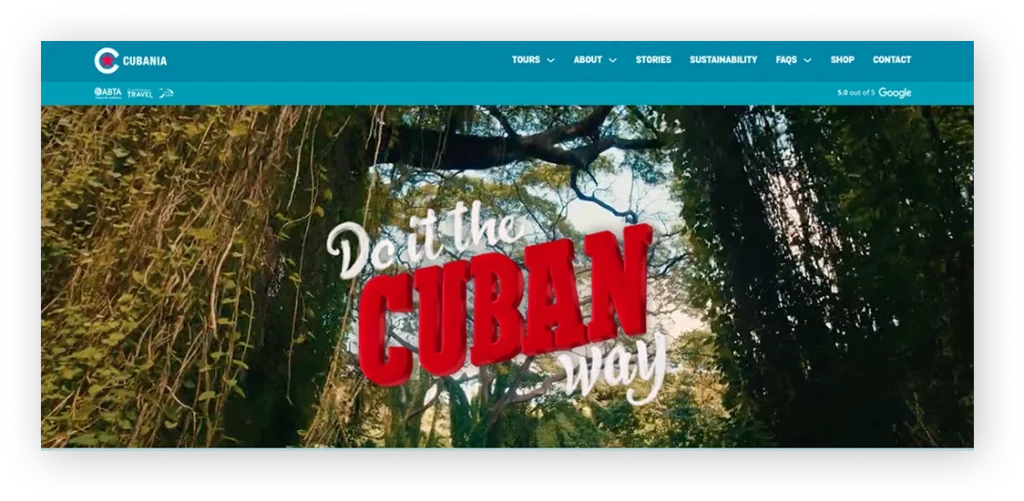
Cubania Travel’s website combines vibrant visuals with a strong focus on immersive, sustainable travel experiences in Cuba. The bold imagery and storytelling create a personal feel, while the design keeps things streamlined for users looking to book group or custom tours.
Special Features:
Itinerary previews with photo-driven storytelling
Emphasis on responsible and active travel
Detailed tour breakdowns with inquiry forms
Visual consistency with Cuban culture and branding
Best For: Destination-focused agencies showcasing cultural experiences and curated trips.
Get Your Travel Web Designs Examples PDF Free
We have curated a list of top travel web designs just for you. Download Travel Website Design Examples PDF for FREE!
Enter your email to get your Free Travel Website Design Examples PDF now

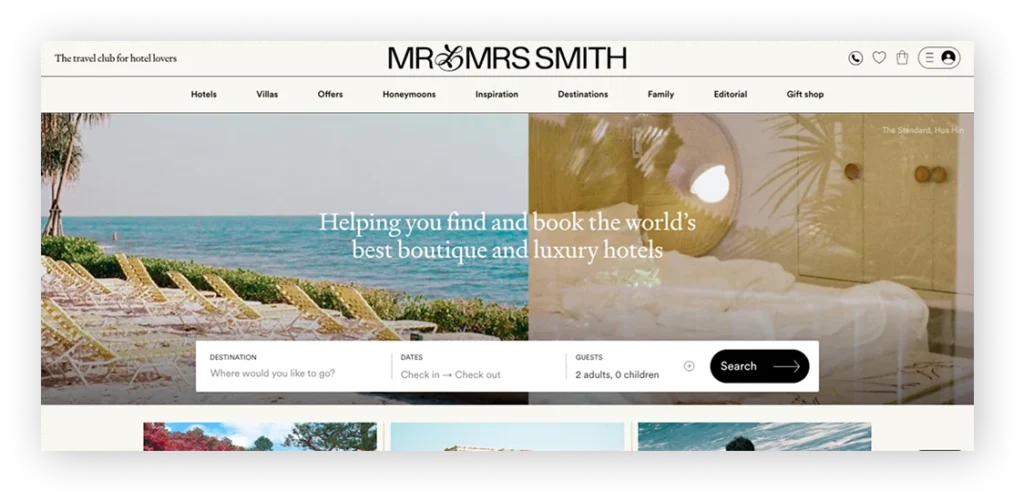
Mr and Mrs Smith is a luxury travel site with a polished, editorial-style design that feels more like a premium lifestyle magazine than a booking platform. It’s tailored for users looking for handpicked boutique stays with flair, comfort, and exclusivity.
Special Features:
Curated collection of boutique hotels worldwide
Member-only offers and concierge service
Large, editorial-style imagery and reviews
“Smith Extra” perks with every booking
Best For: Luxury boutique travel brands aiming for a premium editorial look.
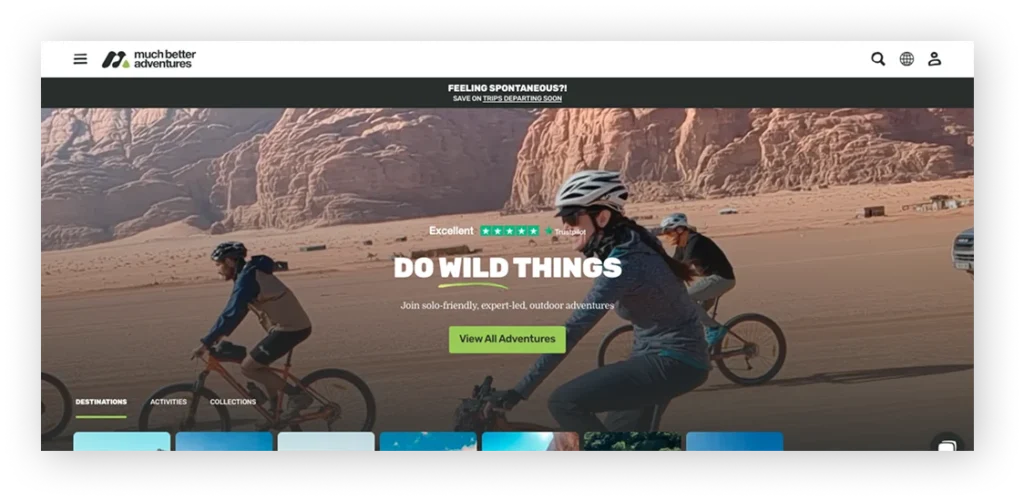
Much Better Adventures delivers a bold, modern feel tailored for adventure seekers. The layout is clean and action-oriented, while trip pages are rich with storytelling, visuals, and eco-conscious messaging. It balances functionality with visual impact perfectly.
Special Features:
Filter trips by adventure type and destination
Sustainability badges and carbon data for trips
Sticky navigation and clean booking CTAs
Reviews in modern card layout for quick scanning
Best For: Sustainable adventure companies promoting small-group, eco-friendly trips.
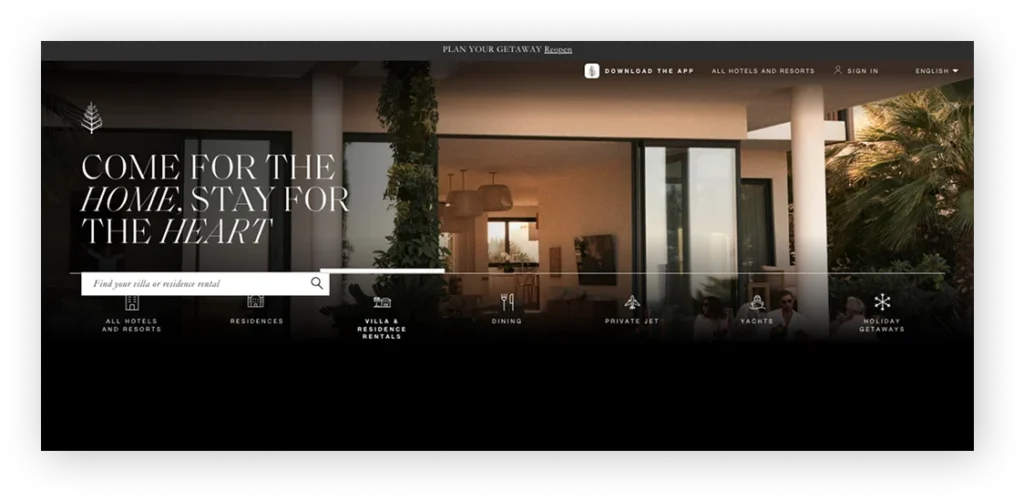
The Four Seasons website reflects elegance and simplicity, matching the luxury it represents. With immersive imagery, smooth scrolling, and personalized touches, it provides a seamless experience for guests booking high-end stays and experiences worldwide.
Special Features:
Location-based browsing and personalized offers
High-resolution images and smooth transitions
Integrated spa, dining, and event booking
Mobile-optimized experience for travelers on the go
Best For: Luxury hotel chains needing a high-end visual experience with premium branding.
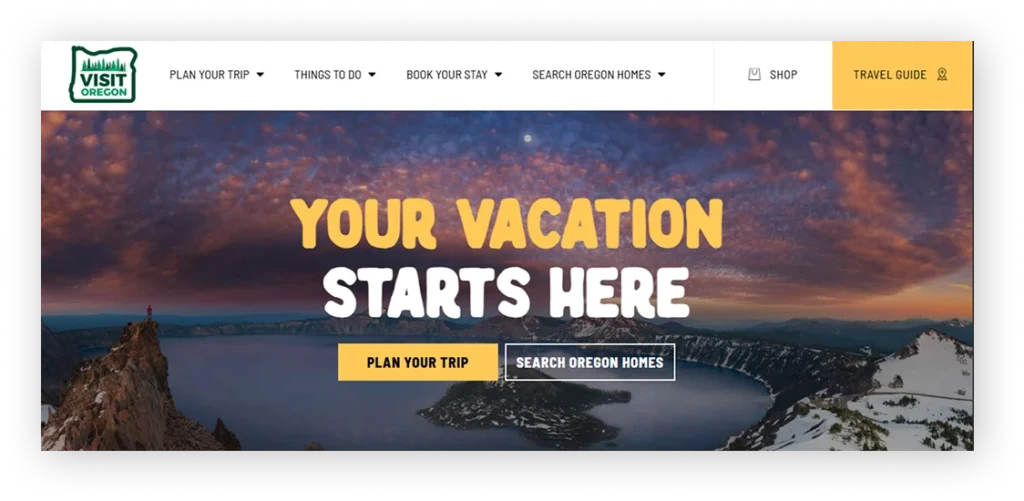
Visit Oregon’s website beautifully captures the state’s scenic charm through immersive visuals and intuitive navigation. The homepage greets users with breathtaking landscapes, inspiring them to explore destinations, plan itineraries, and discover local experiences seamlessly.
Special Features:
- Interactive trip planner with map integration
- Seasonal travel ideas and local event highlights
- High-quality imagery showcasing Oregon’s natural beauty
- Easy access to regional travel resources
Best For: Tourism boards building destination guides with itineraries and interactive maps.
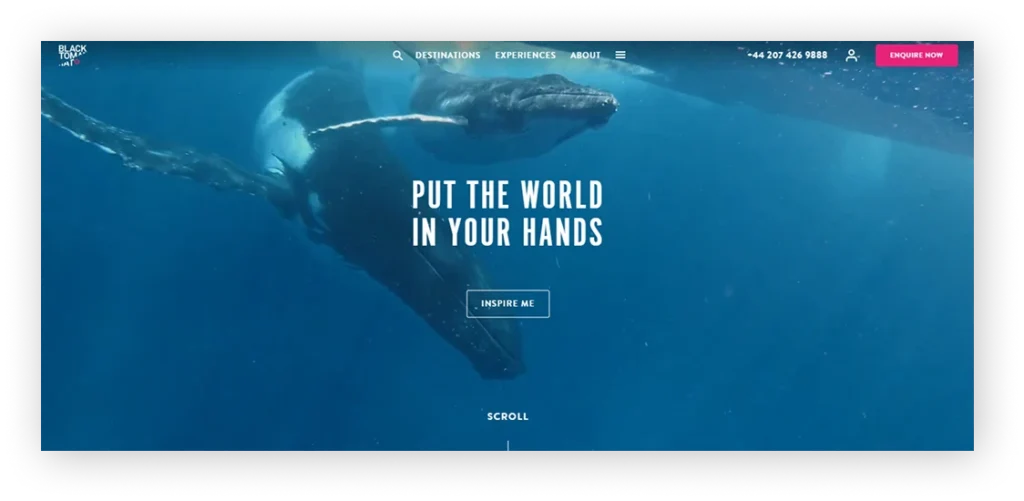
Black Tomato’s website exudes luxury and exclusivity, appealing to travelers seeking personalized, high-end experiences. The minimalist design uses full-screen visuals and elegant typography to convey sophistication while maintaining a simple, easy-to-navigate structure.
Special Features:
- Curated, tailor-made travel experiences
- Immersive imagery and video storytelling
- Clean, editorial-style design layout
- “Get Inspired” section for destination ideas
Best For: Custom travel designers focusing on storytelling and cinematic presentation.
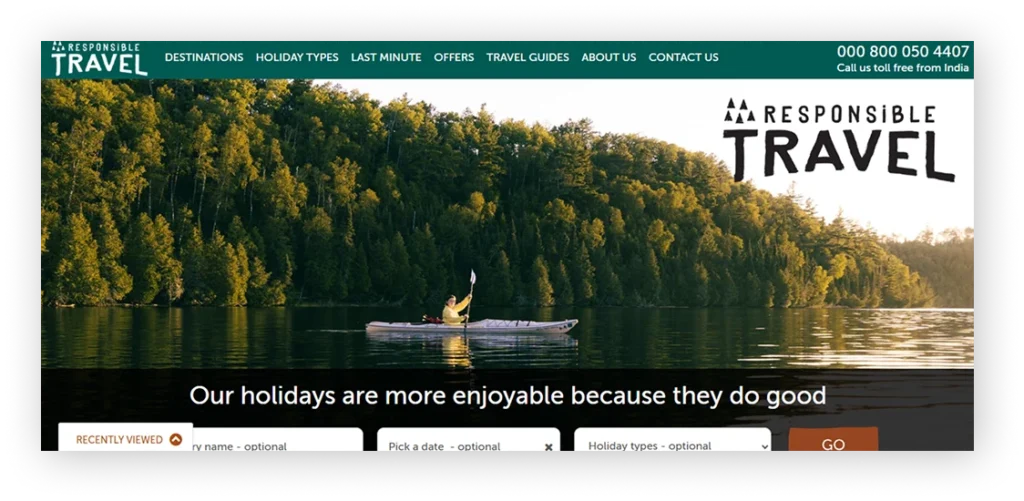
Responsible Travel’s website stands out for its eco-conscious design and focus on sustainable tourism. The interface balances inspiring visuals with clear messaging about ethical travel, offering travelers the ability to make meaningful choices through responsible adventures.
Special Features:
- Sustainability-focused content and transparency on carbon impact
- Easy search by destination or travel type
- Traveler reviews emphasizing authenticity and experience
- Detailed ethical travel guides and stories
Best For: Eco-tourism companies emphasizing ethical travel and sustainability messaging.
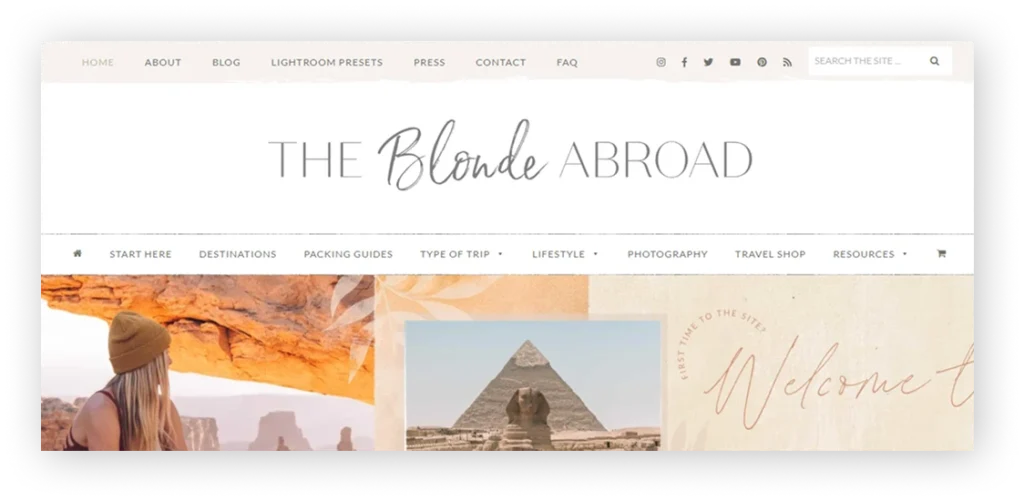
The Blonde Abroad blends travel inspiration with personal storytelling, offering a visually engaging experience for solo and female travelers. Its soft color palette, high-quality photography, and blog-style layout create a warm, welcoming vibe that keeps visitors exploring.
Special Features:
- Organized travel guides by country and theme
- Integrated shop and resource pages
- Inspiring photography with storytelling captions
- User-friendly design optimized for mobile browsing
Best For: Influencer-driven brands with a strong focus on content, guides, and visual identity.
14 Key Elements of a Successful Travel Website
Creating a travel website that captivates visitors and encourages bookings requires a careful blend of design, content, and usability. Inspired by these travel website UX/UI examples , we’ve outlined the must-have elements that every successful travel website should include to engage visitors and drive bookings.
Here are seven essential elements every successful travel website should include:
- Stunning Visuals
High-quality images and videos bring destinations to life. Showcase landscapes, accommodations, and experiences in a way that sparks wanderlust and draws users in immediately. - Compelling Hero Section
Your hero section is the first thing visitors see. A fullscreen banner or video that highlights your best offerings can set the mood, tell a story, and encourage users to explore further. - Clear and Inspiring Copy
Words matter as much as visuals. Engaging, concise copy should provide context, tell stories, and guide users through your website while inspiring them to plan their next adventure. - User-Friendly Navigation & Filters
Travelers want to find information quickly. Intuitive menus, well-structured categories, and filter options for destinations, price, or activities make your site easy to navigate. - Trust Signals
Testimonials, reviews, and certifications build credibility. When visitors see proof of quality from previous travelers, they’re more likely to book with confidence. - Mobile-First Design
A majority of users browse travel websites on mobile devices. Responsive layouts, fast-loading pages, and touch-friendly elements ensure a smooth experience on any screen. - Practical Travel Information
Provide essential details like local attractions, transportation options, maps, and tips. Even brief guides or highlights help users plan their trip and keep them engaged on your site. - Microinteractions & Feedback
Small details like hover effects, button animations, or loading indicators improve usability and make the website feel responsive. - Conversion-Oriented CTAs
Highlighting where and how to place calls-to-action strategically can directly improve leads and bookings. - Accessibility & Inclusive Design
Ensuring color contrast, readable fonts, keyboard navigation, and alt text improves accessibility. - Load Speed & Performance
Fast-loading pages reduce bounce rates and improve user experience, especially for image-heavy travel sites. - Analytics-Driven UX
Encourage using analytics to refine layouts and understand user behavior. - Personalization & Dynamic Content
Show content based on user behavior or location (e.g., recommended destinations or deals). - SEO & Content Structure
Well-organized content and headings improve readability and help travel businesses rank in search engines.
Want to explore more? Check out our detailed guide on the must-have features of a travel website to make your site even more engaging.
If you’re planning a travel website and unsure which design approach fits your business, this is where expert guidance helps.
WebyKing is a leading web design and development agency specialized in travel web design services. We tailor websites to meet the unique needs of each client, ensuring a professional and customized online presence.
Bonus Tip:
For tech-savvy readers, tools like BuiltWith or Wappalyzer can reveal the technologies behind any travel website, including analytics, frameworks, and integrations.
Feeling Overwhelmed by the Technical Side of Website Building?
WebyKing, a full-service agency specializing in travel websites, can design and develop your dream travel and tourism site, taking care of all the technical bits.
Impressed by These Travel Website Design Examples?
Now that you’ve explored various travel website designs, it’s time to create your own! If you’re unsure about how to bring your design to life and achieve the website you desire, the experts at WebyKing are here to assist you.
With our extensive experience in web design, we have the expertise to develop websites that drive revenue. Our proven track record speaks for itself, as we have consistently delivered successful projects that greatly enhance our clients’ business outcomes. You can trust us to create a website that helps you reach your goals.
Are you ready to bring your dream website to reality? Contact us online or give us a call today at +1 347 467 1234 to speak with a strategist about our web design services!
How to Choose the Right Travel Website Design for Your Business
Picking the right travel website design isn’t just about making it look pretty. It is about choosing a setup that actually works for your business and your customers. The right structure should guide visitors smoothly, match your goals, and grow with you over time. Here’s a simple way to figure out what kind of design will fit your travel brand best.
1. Based on Business Type
Your business model directly influences the website features, layout, and design direction.
- Travel agencies need clean service pages, real-time availability, and easy inquiry forms.
- Tour operators benefit from itinerary-focused layouts with detailed day-by-day trip breakdowns.
- Hotel & resort websites need high-quality visuals, room showcase pages, and a smooth booking flow.
- Marketplace platforms require strong search filters, comparison tools, and multi-vendor support.
- Travel blogs/influencers need a content-first layout with guides, categories, and strong SEO structure.
Understanding your business type ensures design decisions support your operational workflow and lead-generation process.
2. Based on Target Audience
Your ideal customer shapes the tone, visuals, and user experience.
- Luxury travelers expect premium design, elegant typography, and rich imagery.
- Budget travelers need fast load times, deal-focused layouts, and transparent pricing.
- Adventure seekers prefer bold visuals, clear activity categories, and easy sorting.
- Corporate travelers want quick navigation, streamlined booking forms, and reliability.
- Solo or female travelers respond better to clean, safe, trust-building design elements.
Aligning the design with user expectations improves engagement and conversions.
3. Based on Required Functionalities
Your website should be designed around the tools and features your users need most.
Common travel features include:
- Online booking engine
- Real-time pricing or availability
- Search and filter system
- Trip comparison
- Interactive maps
- Itinerary builder
- Customer reviews
- Multi-language support
- Secure payment integration
Your design should be chosen based on the functionality you need now — and the features you may want to add in the future.
4. Based on Budget & Scalability
The best design is one that fits your budget today and can scale as your business grows.
- Small budget: A clean, template-based design works well for basic travel websites.
- Medium budget: Custom UX improvements and integrations offer better branding and conversion.
- Premium budget: Fully custom designs with advanced backend systems provide long-term scalability.
Always choose a design platform and structure that can grow with you, not replace your entire website every time you expand.
WebyKing specializes in travel website design that elevates your brand’s online presence and improves customer acquisition. From UX planning to integrations, we handle everything end-to-end.
Frequently Asked Questions
1. Why does every travel company need a professional travel trip planner website?
A professional travel trip planner website streamlines bookings, offers personalized itineraries, and enhances customer experience, leading to more conversions. Discover why your travel agency must have a website.
2. What are the must-have features for a travel website?
Essential features include a user-friendly booking system, interactive maps, customer reviews, and mobile responsiveness for a seamless travel experience. Explore which features are necessary for a travel website.
3. How can a well-designed travel website improve customer engagement?
A well-designed travel website enhances user experience with easy navigation, high-quality visuals, and interactive features, keeping visitors engaged and increasing bookings.
4. What technologies are commonly used to build travel websites?
Travel websites often use technologies like JavaScript frameworks (React, Angular), CMS platforms (WordPress), and APIs for booking, maps, and payment integrations.
5. How much does it cost to build a custom travel website in 2026?
A custom travel website in 2026 typically costs $5,000 to $45,000+, depending on features like booking engines, APIs, custom dashboards, and advanced UI/UX.
6. How long should I expect my travel website design and development to take?
The timeline to build a travel website generally falls between 4 to 14 weeks, depending on size and complexity.
7. How is AI changing travel website design in 2026?
AI improves personalization, automates trip planning, offers smart chatbots, enhances search, and boosts security through fraud detection.
8. Do I need a mobile app, or is a responsive website enough?
A responsive website is enough for most travel businesses. Choose an app only if you need offline access, push notifications, or frequent repeat bookings.
9. What security features are essential for a travel booking site?
Must-have security features include SSL/HTTPS, secure payment gateways, 2FA, data encryption, firewalls, backups, and GDPR compliance.
Ravi Makhija, the visionary Founder and CEO of WebyKing, is a seasoned digital marketing strategist and web technology expert with over a decade of experience. Under his leadership, WebyKing has evolved into a premier full service web and marketing agency, delivering innovative solutions that drive online success. Ravi’s deep understanding of the digital landscape combined with his passion for cutting-edge technologies empowers him to consistently exceed client expectations and deliver results that matter.